

Welding vs Industrial Fabrication in Kenya: What the Industrial Sector Should Know
If you are procuring metalwork for a factory, warehouse, or fuel station in Kenya, these two terms are not the same and confusing them costs time, money, and structural integrity on your project.
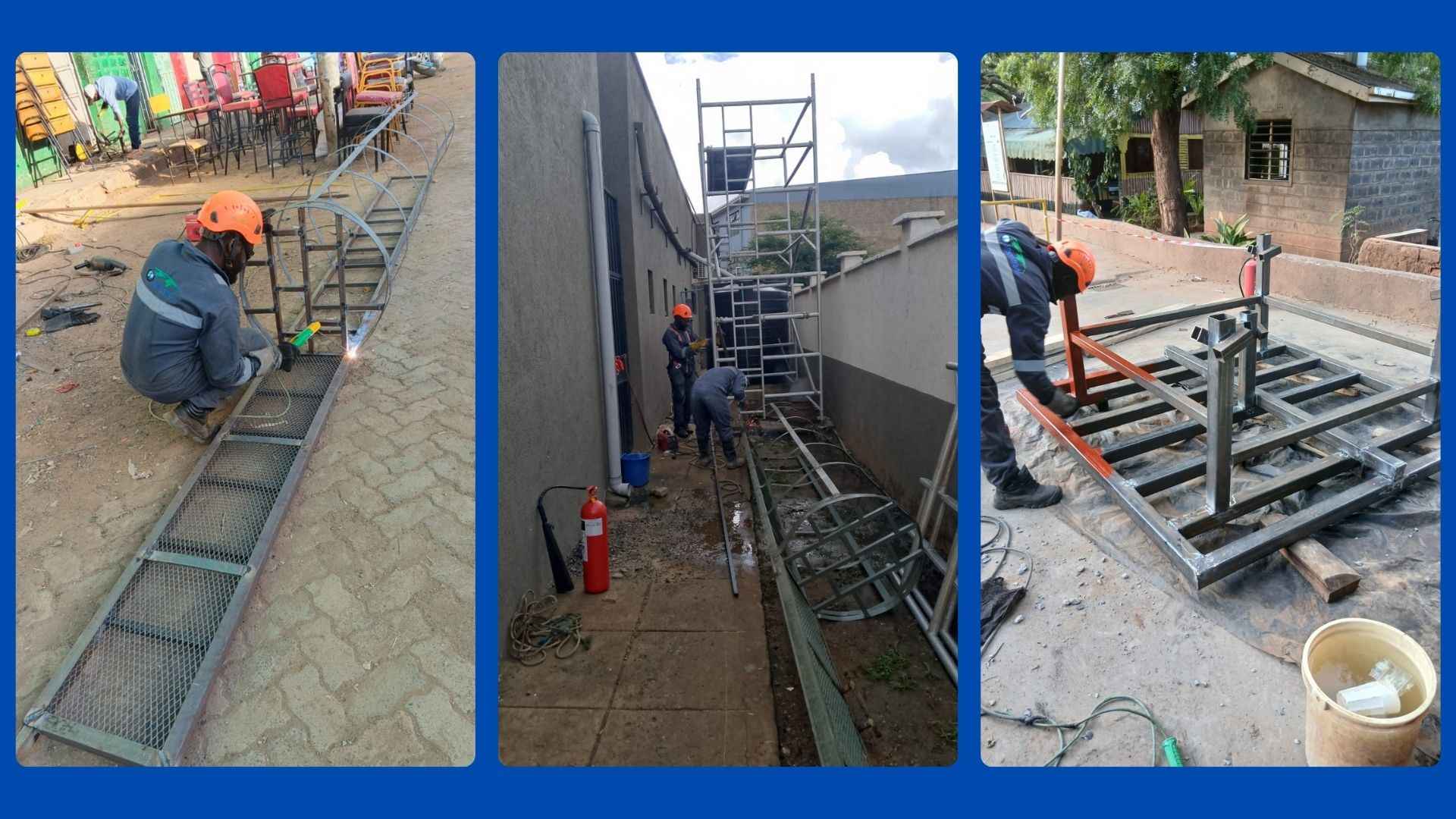
Structural steel fabrication demands engineering drawings, correct material grades, and qualified welders — not just a welding machine on site.
Walk into any manufacturing plant, warehouse, or fuel station in Kenya and one thing is clear: the metalwork either holds everything together or becomes the point of failure. It is not just a procurement decision. It directly affects your safety record, structural compliance, operational continuity, and total cost of ownership over the life of your facility.
The problem on most sites across Kenya? Welding and industrial fabrication are treated as the same thing. A welder gets called in for a job that needs a full fabrication scope. Or a client pays for a fabrication package when a straightforward welding repair was all that was required. Either way, money gets wasted or structures fall short.
This guide sets out the difference clearly: what each service actually covers, when each one applies, what to expect from a qualified contractor, and how to budget accurately for what you actually need.
What Is Welding? A Clear Definition
Welding is a joining process. It uses heat, pressure, or a combination of both to fuse two or more metal pieces together at the molecular level. The result is a bond that, when done correctly, is as strong as or stronger than the base metal itself.
Common welding methods used in Kenya's industrial sector include:
MIG Welding (GMAW)
Fast, clean, and suited for mild steel. Widely used in Kenyan workshops for structural frames, tanks, and general metalwork. MIG is the workhorse process on most fabrication shop floors across Nairobi and Mombasa.
TIG Welding (GTAW)
Produces high-precision, aesthetically clean welds. Preferred for stainless steel, food-grade equipment, and pharmaceutical plant components where surface finish and weld quality are non-negotiable.
Arc Welding (SMAW / Stick Welding)
Versatile and portable. Common on construction sites and for field repairs across Kenya's industrial regions, including remote sites where access to workshop equipment is limited.
Flux-Core Arc Welding (FCAW)
Effective for thicker metals and outdoor conditions. Particularly useful in coastal and high-humidity environments like Mombasa, where shielding gas-based processes face challenges.
Welding is one component within the broader scope of industrial fabrication. A skilled welder executes a specific joining task. A fabrication team designs, cuts, shapes, assembles, and delivers a finished metal structure or product.
What Is Industrial Fabrication?
Industrial fabrication is the complete process of creating metal structures, components, or systems from raw material through to a finished, installation-ready product. It is not a single task. It is a multi-stage scope that typically includes:
- Design and engineering — structural drawings, material specifications, load calculations
- Material procurement — sourcing appropriate steel grades, tubes, plates, and hardware
- Cutting — plasma cutting, guillotine shearing, or laser cutting to size
- Forming and bending — press brakes, rollers, and mandrel bending to achieve required geometry
- Fitting and assembly — jigging, tacking, and positioning components before final joining
- Welding — the actual joining of all pre-prepared components
- Finishing — grinding, sandblasting, priming, and painting or galvanising
- Quality inspection — dimensional checks, weld inspection (visual, NDT), and load testing where required
- Delivery and installation — transport to site and erection or fitting
Welding sits at step six. Industrial fabrication is the entire project from concept through to completion.
Why the Distinction Matters for Kenyan Industrial Projects
Kenya's manufacturing and industrial sectors are growing rapidly, driven by growing demand across agro-processing, logistics, energy, and infrastructure. Yet procurement decisions are frequently based on a misunderstanding of what is actually being commissioned.
Matching the scope to the service is how you protect your budget and your asset.
Side-by-Side Comparison
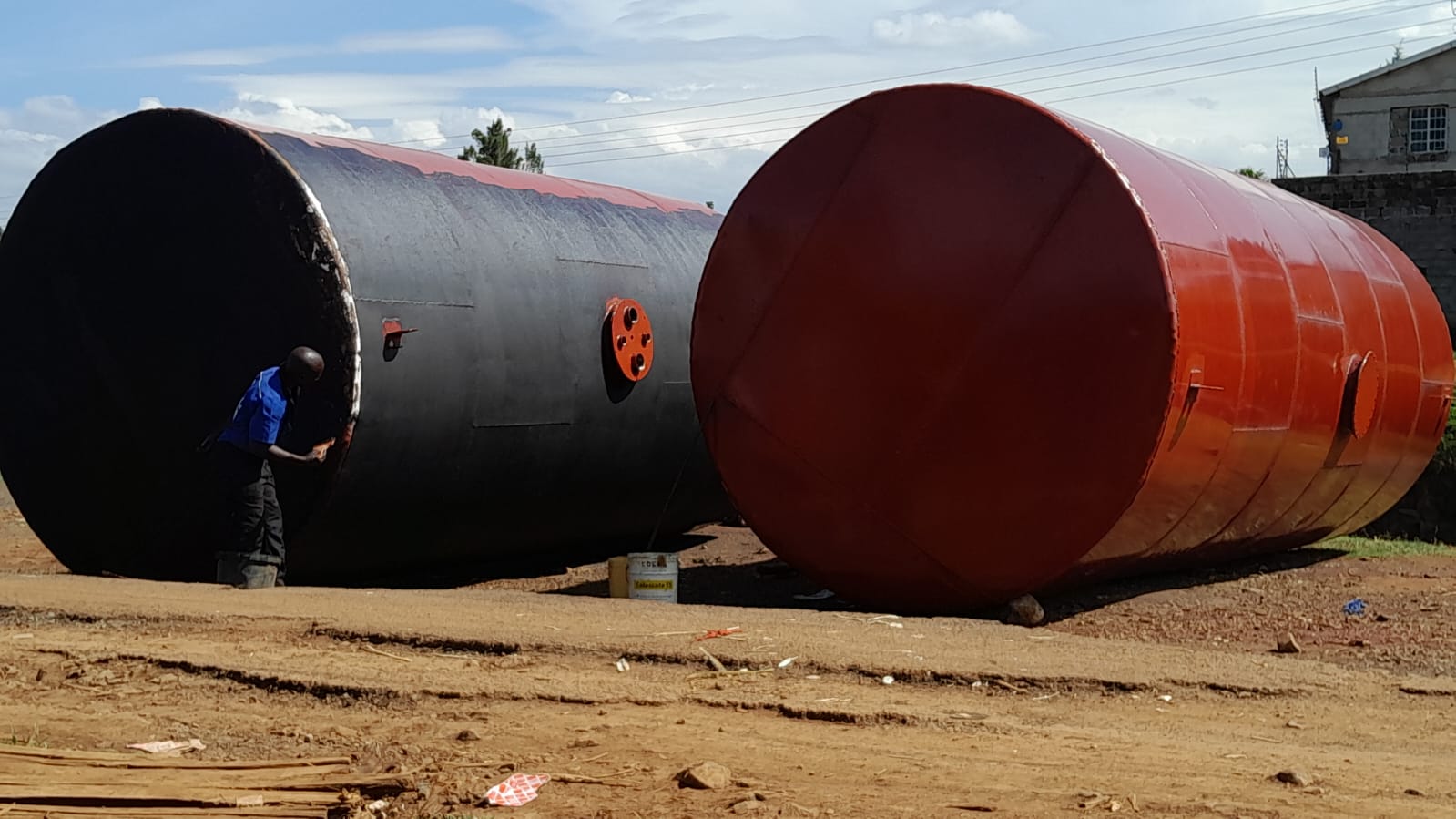
Welding is one task within fabrication. Confusing the two leads to either underspecified structures or unnecessary cost.
| Feature | Welding | Industrial Fabrication |
|---|---|---|
| Scope | Joining operation only | End-to-end metal product creation |
| Output | Joined components | Complete structure or system |
| Engineering input | Usually none | Structural drawings and specs |
| Team size | 1 to 3 operatives | Multi-discipline team |
| Equipment required | Welding machine, PPE | Full workshop: cutting, bending, finishing |
| Timeline | Hours to days | Days to weeks or months |
| Typical cost (Kenya) | KES 500 to 3,000 per running metre | KES 80,000 to 2M+ depending on scope |
| Certification required | Welder qualification (AWS/KEBS) | Contractor registration, NCA where applicable |
| Use case examples | Gate repair, pipe joint, bracket | Steel structure, tank, conveyor frame, fuel canopy |
| Quality verification | Visual weld inspection | Full QA/QC including NDT and load testing |
Applications in Kenya's Industrial Sector
When You Need Welding Services
- Repairing cracked or broken metal structures on site
- Joining pipe systems in plumbing, HVAC, or fuel lines
- Fitting brackets, supports, or minor structural additions
- Emergency field repairs at factories, farms, or remote sites
- Customising off-the-shelf equipment for specific operational needs
For straightforward work, a certified welder with the right electrodes and process for the base metal is all you need. These jobs are typically delivered on-site or at a small workshop.
When You Need Industrial Fabrication
- Structural steelwork — portal frames for warehouses, factories, or processing plants
- Storage tanks and pressure vessels — fabricated to KEBS and international pressure vessel standards
- Conveyors, hoppers, and material handling equipment — custom-built for agro-processing, mining, or logistics
- Fuel station canopies and forecourt structures — engineered for wind and load requirements
- Staircases, walkways, and mezzanine platforms — requiring structural calculations and NCA compliance
- Bespoke plant and machinery frames — where off-the-shelf solutions do not exist
- Security gates, perimeter fencing systems, and entry structures — for commercial, industrial, or institutional properties
ASCO EA's Industrial Fabrication and Welding services cover the full scope of these applications across Kenya, from initial concept drawings through to site installation.
Standards and Compliance in Kenya
Kenya's industrial fabrication and welding sector is governed by a combination of local and internationally adopted standards. Knowing these protects you when evaluating contractors.
KEBS sets and enforces standards for materials, products, and services used in Kenya's construction and industrial sectors. Key standards affecting fabrication and welding:
- KS 02-94 — Specification for structural steel
- KS EAS 148 — Welding consumables and quality requirements
- Material certifications for steel plate, tubes, and sections
The NCA requires that contractors involved in structural works, including large-scale metal fabrication, are registered in the appropriate category. If your fabrication scope forms part of a building or structure requiring a building permit, your fabrication contractor should carry NCA registration.
Ask your contractor to produce their NCA certificate and verify it on the NCA portal before signing any contract.
For welder qualification and work quality, internationally recognised frameworks include:
- AWS D1.1 — Structural Welding Code (Steel), widely referenced for structural steelwork in Kenya
- ISO 9606 — Qualification testing of welders
- ISO 3834 — Quality requirements for fusion welding of metallic materials
For critical applications including pressure vessels, structural steelwork, and fuel tanks, insist on documented welder qualifications tied to the specific process and material type.
Cost Guide: Welding and Fabrication in Kenya (2025)
Cost varies significantly based on steel grade, complexity, surface treatment, and geographic location. The figures below reflect indicative market rates for Nairobi and surrounding industrial zones.
Welding-Only Services
| Work Type | Indicative Rate |
|---|---|
| General mild steel welding (workshop) | KES 800 to 2,500 per hour |
| Site welding (mobilisation included) | KES 2,500 to 6,000 per hour |
| Pipe welding (small bore, per joint) | KES 1,500 to 4,500 per joint |
| Structural weld (per running metre) | KES 600 to 2,000 per metre |
Industrial Fabrication Projects
| Project Type | Indicative Cost |
|---|---|
| Steel gate (standard double, painted) | KES 45,000 to 120,000 |
| Mezzanine floor per m² (structural) | KES 12,000 to 25,000 per m² |
| Storage tank 10,000L (mild steel, painted) | KES 180,000 to 380,000 |
| Portal frame warehouse (per m²) | KES 8,000 to 18,000 per m² |
| Fuel station canopy (standard 4-column) | KES 850,000 to 2,200,000 |
| Conveyor frame (10m, mild steel) | KES 280,000 to 650,000 |
| Industrial staircase (single flight) | KES 90,000 to 220,000 |
Rates exclude VAT. Material costs account for approximately 55 to 70% of total fabrication project cost and fluctuate with global steel prices.
What to Look for in a Fabrication and Welding Contractor
Selecting the right contractor is as critical as defining the right scope. Here is a practical checklist for evaluating any contractor before you commit:
-
1
Workshop Capability
Visit the workshop if possible. A credible industrial fabricator will have dedicated cutting equipment (plasma or guillotine), bending capacity, welding bays, and finishing facilities. A contractor operating from an open yard with a single welding machine is not set up for complex fabrication.
-
2
Welder Certifications
Ask for welder qualification records. Welders should be tested and certified for the specific welding process and material type required for your job. This is non-negotiable on structural or pressure-containing applications.
-
3
Past Project References
Request references from comparable projects at similar scope and application. A contractor who has built agricultural silos but never fabricated a fuel canopy is not the right choice for your forecourt structure. Go and see completed work in person.
-
4
Engineering and Drawing Capability
Can they produce or work from structural drawings? Industrial fabrication without engineering documentation is a red flag. Drawings signed by a registered engineer provide the paper trail needed for NCA compliance and give you recourse if work falls short.
-
5
Surface Treatment and Finishing
In Kenya's varied climate, from humid coastal conditions in Mombasa to corrosive industrial environments inland, surface preparation and coating are not optional. Ask exactly what surface treatment system is included in the quote.
-
6
Contract and Warranty Terms
A professional fabricator will provide a written quotation, scope of works, and warranty terms. Document materials, timelines, payment milestones, and defects liability provisions clearly before any work begins.
Structural Steel Fabrication: A Closer Look
Structural steel fabrication deserves particular attention because it is the most specification-intensive and highest-stakes segment of the Kenyan fabrication market. Steel-framed structures — warehouses, factories, processing plants — have become the dominant construction typology for industrial development in Kenya, particularly in the Nairobi Industrial Area, Athi River, and Mombasa's port zone.
- Steel grade must be correct. S275 and S355 are the grades most commonly specified in Kenya for structural applications. Specify the grade and ask for the mill certificate — do not accept "mild steel" as a sufficient answer.
- Connections must be engineered. Bolted and welded connections need to be designed for the applied loads, not estimated or guessed on site.
- Surface treatment must match the exposure category. A marine-influenced Mombasa environment requires a different corrosion protection system than an inland Nairobi warehouse.
- Erection must be supervised. Steel fabricated to a high standard can still fail if erected incorrectly. Supervision during erection is part of the fabrication contractor's accountability.
ASCO EA's team delivers Industrial Fabrication and Welding with in-house engineering capability and a structured QA process covering every stage from material procurement to final inspection.
Sector-Specific Applications Across Kenya
Agro-Processing and Food Manufacturing
Stainless steel fabrication is prevalent in this sector: silos, mixing tanks, processing tables, conveyor frames. Food-grade surface requirements demand TIG welding and specific finishing standards. Cross-contamination risk means no shortcuts on hygiene compliance.
Fuel and Energy Infrastructure
Fuel storage and forecourt structures require fabrication to KEBS and EPRA standards. Tank fabrication and canopy erection at fuel stations are regulated activities with specific compliance requirements that must be met before commissioning.
Logistics and Warehousing
Kenya's rapidly growing logistics sector, driven by SGR access, the Nairobi Expressway, and e-commerce, is generating sustained demand for steel-framed warehouses, mezzanine storage platforms, and loading bay structures across the country.
Manufacturing and Industry
From garment factories to pharmaceutical plants — custom machine frames, ductwork supports, access platforms, and safety guarding are typical fabrication requirements. Most cannot be sourced off-the-shelf and must be fabricated to site-specific dimensions.
Common Mistakes Kenyan Industrial Buyers Make
-
Choosing on price alone
Low-cost fabrication typically cuts corners on material grade, surface treatment, or welder qualification. The cost of rework or structural failure far exceeds any initial saving. Get three quotations, but evaluate the full scope — not just the bottom line.
-
Skipping engineering drawings
Fabricating from a sketch or verbal description produces variable results. Drawings protect both the client and the contractor, provide the basis for NCA compliance, and give you a document to hold the contractor against if work falls short.
-
Not specifying the steel grade
"Mild steel" covers a wide range of grades with significantly different mechanical properties. Specify the grade and ask for the mill certificate before fabrication begins.
-
Ignoring surface treatment
Untreated or poorly treated steelwork will corrode within two to five years in humid or coastal areas of Kenya, requiring expensive remediation or full replacement. Surface treatment is not optional — it is part of the fabrication scope.
-
Confusing a welder with a fabricator
They are different services with different scopes, team sizes, equipment requirements, and accountability levels. Matching your requirement to the right service level from the start saves cost and protects outcomes.
Decision Summary: What Do You Need?
Use this quick framework when procuring metalwork for your industrial project in Kenya:
| If your requirement is... | You need... |
|---|---|
| A repair or joining task on existing metalwork | Welding service |
| A new structure or component built from raw material | Industrial fabrication |
| A structural application (floor, frame, staircase) | Fabrication with engineering drawings |
| A pressure-containing vessel (tank, vessel) | Fabrication with KEBS-compliant material certs and welder qualification |
| A fuel infrastructure component | Fabrication with EPRA compliance |
| A bespoke machine frame or processing equipment | Specialist industrial fabrication |
Work With ASCO EA for Industrial Fabrication and Welding in Kenya
ASCO EA provides end-to-end Industrial Fabrication and Welding services for Kenya's manufacturing, energy, logistics, and construction sectors. Structural steel fabrication, bespoke metalwork, welding to AWS and KEBS standards, full surface treatment and site installation. Tell us about your project and we will advise on the right scope and budget for your requirement.
Frequently Asked Questions
ASCO EA is a full-service construction and industrial contractor operating across Kenya. Our services span Corporate and Industrial Construction, Industrial Fabrication and Welding, Structural Works, Fuel Infrastructure and Forecourt Works, and Electrical Installations and Systems.