

Best Practices in Structural Steel Fabrication in Kenya (2026 Guide)
Structural steel fabrication in Kenya is a regulated, engineering-led process that goes far beyond cutting and welding metal in a workshop. This guide covers every best practice that separates compliant, long-lasting steel structures from the ones that fail inspections, corrode prematurely, or collapse under load.

Structural steel fabrication in Kenya demands engineering drawings, certified welders, correct material grades, and a structured QA process from raw material to final inspection.
Kenya's construction sector is growing fast. Warehouses, factories, processing plants, fuel station canopies, and multi-storey commercial buildings are going up across Nairobi, Mombasa, Kisumu, Nakuru, and every major county town. Almost all of them depend on structural steel fabrication. But the quality of that fabrication varies dramatically, and the gap between good practice and poor practice is the difference between a structure that serves its owners for 30 years and one that requires costly remediation within five.
At Universal Innovations and Industrial Ltd, we deliver structural steel fabrication and erection across Kenya. This guide sets out the standards, processes, and practices that every client, procurement manager, and project team should understand before commissioning a steel structure.
- What Structural Steel Fabrication Actually Involves
- Kenya Standards and Compliance Framework
- Best Practice 1: Correct Material Selection and Verification
- Best Practice 2: Engineering Drawings Before Fabrication Begins
- Best Practice 3: Cutting, Forming, and Dimensional Accuracy
- Best Practice 4: Welding Standards and Welder Qualification
- Best Practice 5: Connection Design and Bolted Joints
- Best Practice 6: Surface Treatment and Corrosion Protection
- Best Practice 7: Quality Assurance and NDT Inspection
- Best Practice 8: Erection and Site Supervision
- Best Practice 9: Documentation and Traceability
- How to Evaluate a Structural Steel Fabricator in Kenya
- Common Mistakes That Cost Projects in Kenya
- Frequently Asked Questions
What Structural Steel Fabrication Actually Involves
Structural steel fabrication in Kenya is the complete process of converting raw steel sections, plates, and hollow sections into finished structural components ready for erection on site. It is not welding alone. It is a sequence of engineered steps that starts with a drawing and ends with a completed, inspected structure.
Stage 1: Design and Engineering
Structural calculations, section sizing, connection design, and production of fabrication drawings by a registered structural engineer. No legitimate fabrication begins without this stage complete.
Stage 2: Material Procurement
Sourcing the correct steel grade with mill certificates verifying chemical composition and mechanical properties. Material traceability starts here.
Stage 3: Cutting and Forming
Plasma cutting, guillotine shearing, or sawing to length. Press braking, rolling, and drilling for connection holes. Dimensional accuracy to within fabrication tolerances.
Stage 4: Fit-Up and Assembly
Jigging and tacking components into position before welding. Correct alignment at this stage prevents dimensional errors in the finished structure.
Stage 5: Welding
Qualified welders using approved processes and consumables, following Welding Procedure Specifications (WPS) tied to the base material and joint configuration.
Stage 6: Inspection and NDT
Visual inspection of all welds, non-destructive testing of critical joints, dimensional verification against drawings, and surface assessment before coating.
Stage 7: Surface Treatment
Blast cleaning, priming, and application of the specified coating system. Surface treatment specification depends on the environmental exposure category of the structure.
Stage 8: Delivery and Erection
Controlled transport to site, supervised erection by a competent team, and final inspection of the erected structure before handover.
Each stage has specific best practices associated with it. The sections below address the most critical of these for the Kenyan construction context.
Kenya Standards and Compliance Framework for Steel Fabrication
Structural steel fabrication in Kenya operates under a clear regulatory framework. Understanding this framework is essential for any client commissioning steel structures, because compliance is not optional and the consequences of non-compliance range from failed NCA inspections to structural failure.
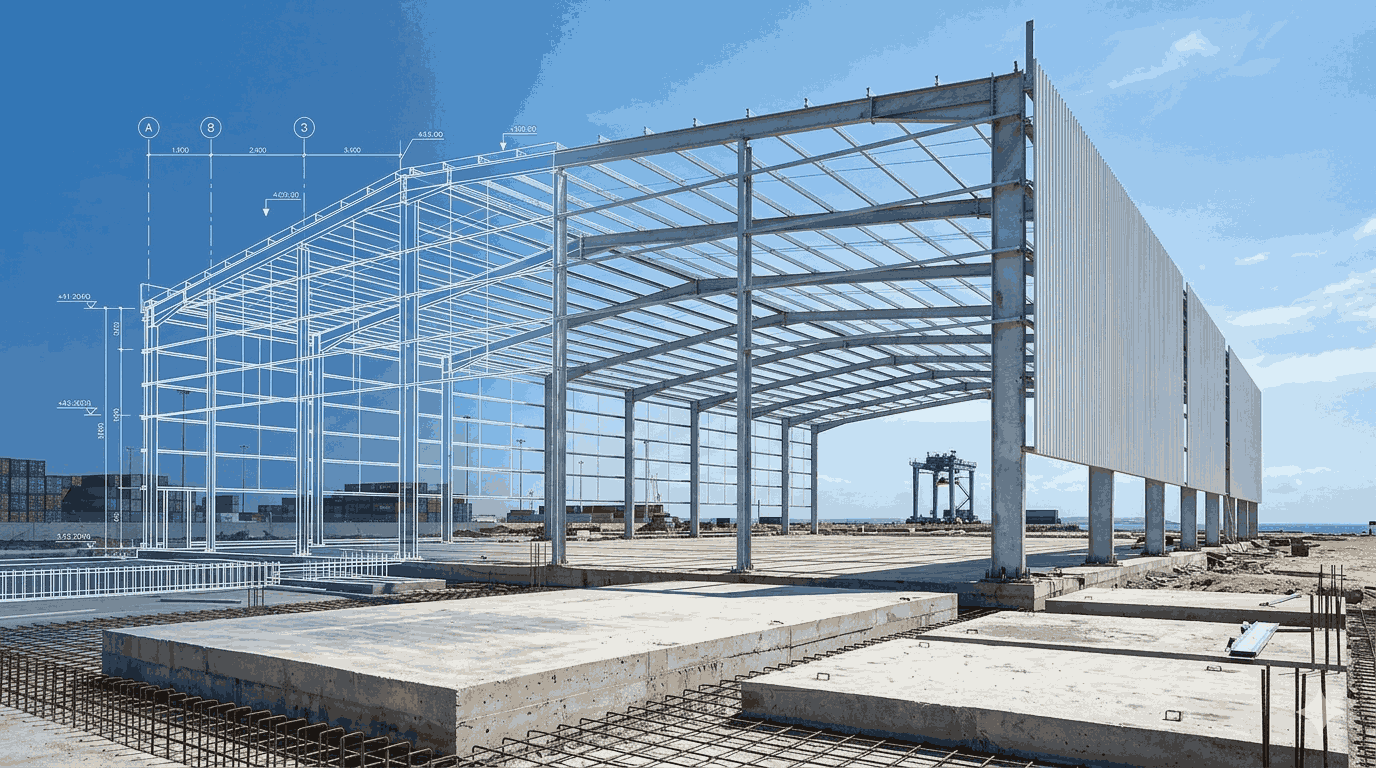
Kenya adopted Eurocode 3 as the mandatory design standard for steel structures from January 2021. All structural steel fabrication must comply with this framework alongside KEBS material standards.
Eurocode 3 - Mandatory Since January 2021
KEBS issued Gazette Notice No. 13048 adopting the Structural Eurocodes, with Eurocode 3 (EN 1993) becoming the mandatory design standard for structural steel in Kenya from January 2021. This replaced the older British Standard BS 5950. The National Construction Authority (NCA) enforces this requirement, and all structural steel designs submitted for NCA approval must follow Eurocode 3 provisions.
For fabricators and their clients, this means any structural steel drawings used for fabrication must have been prepared under Eurocode 3, by a registered engineer. Drawings produced to the old BS 5950 standard are no longer compliant for new builds.
KEBS Material Standards
Steel used in structural fabrication in Kenya must conform to the relevant Kenya Bureau of Standards specifications. Key standards include:
- KS 02-94 - Specification for structural steel
- EN 10025 - Hot-rolled structural steel products (adopted by KEBS)
- KS EAS 148 - Welding consumables and quality requirements
- EN 10219 - Cold-formed welded structural hollow sections
NCA Registration
Structural fabrication that forms part of a building requiring a building permit falls under NCA jurisdiction. Contractors involved in structural works must hold current NCA registration in the appropriate category. Always verify your fabrication contractor's NCA status on the NCA online portal before signing any contract.
AWS D1.1 - Structural Welding Code
While Eurocode 3 governs structural design, the American Welding Society's AWS D1.1 Structural Welding Code for Steel is widely referenced in Kenya for welding quality requirements, welder qualification testing, and weld inspection criteria. ISO 9606 is also used for formal welder qualification.
Best Practice 1 - Correct Material Selection and Verification
Specify the Right Steel Grade and Demand Mill Certificates
One of the most common failures in structural steel fabrication across Kenya is the use of incorrect steel grades. "Mild steel" is not a specification. It covers a range of grades with significantly different yield strengths, toughness properties, and weldability characteristics. Specifying the wrong grade does not just affect cost. It affects the structural integrity of everything built from it.
The two most commonly specified structural steel grades in Kenya under EN 10025 are:
| Grade | Yield Strength | Typical Applications in Kenya | Notes |
|---|---|---|---|
| S235 | 235 N/mm² | Light applications, secondary members | Rarely specified for primary structure |
| S275 | 275 N/mm² | Most structural steelwork in Kenya | Most widely used grade - the default structural grade |
| S355 | 355 N/mm² | Heavily loaded members, long-span structures | Specified where S275 members become too heavy |
Every steel section, plate, or hollow section delivered to a fabrication workshop must come with a mill certificate verifying the heat number, chemical composition, mechanical test results (yield strength, tensile strength, elongation, and Charpy impact where specified), and conformance to the relevant standard. Never allow fabrication to begin on material that cannot be traced to a verifiable mill certificate.
Best Practice 2 - Engineering Drawings Before Fabrication Begins
No Fabrication Without Complete, Approved Drawings
Structural steel fabrication in Kenya without complete engineering drawings is one of the most common and most costly mistakes made on construction projects. A verbal description, a sketch on a piece of paper, or a reference to "something like that building over there" is not a basis for fabrication.
Proper fabrication drawings must include:
- General arrangement drawings showing the complete structural layout, column and beam positions, and overall dimensions
- Detail drawings for every member type - section size, length, connection details, and hole patterns
- Connection details for all bolted and welded joints, including weld sizes, weld types, and bolt grades
- A material schedule listing every section by type, grade, and quantity
- Surface treatment specification tied to the exposure category of the structure
- Engineer's stamp and registration number - required for NCA compliance
Drawings must be approved by the client and the engineer of record before fabrication begins. Any changes after fabrication starts result in costly rework. The investment in proper drawings at the front end saves multiples of that cost during fabrication and on site.
Best Practice 3 - Cutting, Forming, and Dimensional Accuracy
Precision Cutting and Tolerance Control
The quality of a steel structure is established in the workshop, before a single bolt is tightened on site. Dimensional accuracy during cutting and forming determines whether components fit together correctly during erection, whether connections align, and whether the finished structure meets the dimensional tolerances specified in Eurocode 3.
Best practice cutting methods for structural steel fabrication in Kenya include:
- Plasma cutting - fast, accurate, and suitable for plates and sections up to 50mm thickness. The dominant method for production cutting in well-equipped Kenyan workshops
- Oxy-fuel cutting - used for thicker plates. Requires skilled operation to control heat input and prevent distortion
- Cold sawing - used for cutting structural sections (beams, columns) to length where square, clean ends are required for end-bearing connections
- Drill press or magnetic drill - for connection holes. Holes must be positioned to drawing dimensions and drilled or punched to the correct diameter for the specified bolt size
Dimensional tolerances for fabricated steelwork in Kenya follow EN 1090-2, the execution standard for structural steel. For most structural applications, length tolerances are within plus or minus 2mm, and angular deviations within 1 degree. Critical connections and column bases have tighter tolerances.
A fabricator who cannot demonstrate that components are checked against drawings before assembly is not practising quality fabrication.
Best Practice 4 - Welding Standards and Welder Qualification
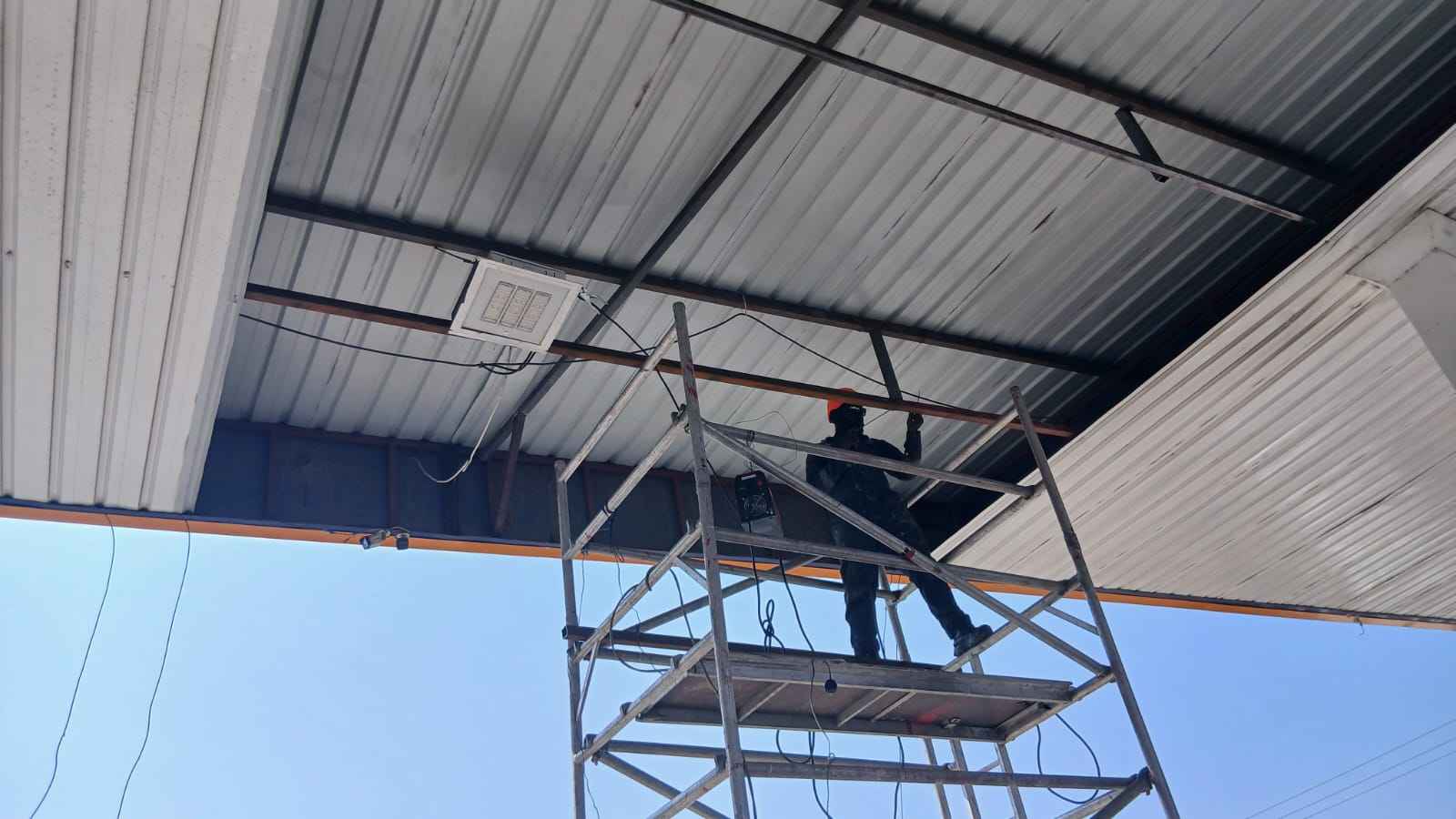
Structural welding in Kenya must be carried out by welders qualified to the relevant process and material type under AWS D1.1 or ISO 9606. Qualification records must be available for inspection.
Qualified Welders, Approved Procedures, Correct Consumables
Welding is the joining operation at the heart of structural steel fabrication, and it is also the area where the highest proportion of quality failures occur in the Kenyan market. A structural weld that looks acceptable to the eye can carry defects invisible to visual inspection that significantly reduce its load-carrying capacity.
Best practice structural welding in Kenya requires three things to be in place simultaneously:
- Qualified welders - every welder performing structural welds must hold a current qualification certificate for the specific welding process (MIG, TIG, SMAW) and material type (carbon steel, stainless steel). Qualification testing follows AWS D1.1 or ISO 9606. Certificates must be current and available for inspection. An unqualified welder working on structural steel is a liability, not a saving.
- Welding Procedure Specifications (WPS) - every weld type on a structural project should be covered by a written WPS specifying the welding process, joint preparation, preheat requirements, interpass temperature, electrode type and diameter, travel speed, and post-weld treatment. The WPS must have been validated by a Procedure Qualification Record (PQR). Fabricating structural steel without WPS documentation is non-compliant with ISO 3834.
- Correct consumables - welding electrodes and wire must match the base material grade. S355 steel welded with consumables matched to S275 produces an undermatched weld that is weaker than the surrounding parent metal. Consumables must be stored correctly to prevent moisture absorption, which causes hydrogen-induced cracking in structural welds.
For structural applications in Kenya, common welding processes and their appropriate uses are:
| Process | Code | Best Use in Kenya | Notes |
|---|---|---|---|
| MIG Welding | GMAW | Main production welding in workshop | Fast, clean, good for fillet and butt welds on mild and structural steel |
| Stick Welding | SMAW | Site welding, field repairs, positional welding | Versatile and portable - used widely on Kenyan construction sites |
| TIG Welding | GTAW | Stainless steel, high-precision joints | Used for food-grade, pharmaceutical, and precision structural applications |
| Flux-Core Arc Welding | FCAW | Heavy section welding, outdoor conditions | Effective in coastal and high-humidity environments where shielding gas is impractical |
Best Practice 5 - Connection Design and Bolted Joints
Engineered Connections, Correct Bolt Grades, Proper Torquing
Connections are the most structurally complex and most failure-prone elements in steel structures. The majority of structural steel failures in Kenya originate not in the members themselves but in improperly designed or improperly executed connections.
Best practice for structural connections in Kenya includes:
- All connections must be designed by a registered structural engineer to Eurocode 3 requirements. This includes base plates, beam-to-column connections, splice connections, and bracing connections. A connection designed by rule of thumb or copied from another project without engineering verification is a risk.
- Bolt grades must be specified and verified. Structural bolts in Kenya are typically Grade 8.8 (high-strength) or Grade 4.6 (ordinary structural bolts). The grade must match the connection design. Using the wrong grade bolt in a preloaded connection is non-compliant and potentially dangerous.
- Hole dimensions must match bolt diameters. Clearance holes are typically bolt diameter plus 2mm for standard clearance. Oversized or elongated holes affect load transfer and are only permissible where specifically designed for.
- Bolt torquing must be done with calibrated torque wrenches. Undertorqued bolts in preloaded connections do not develop the required clamping force. Overtorqued bolts can strip threads or induce yielding. Torque values are specified in Eurocode 3 Annex K and must be followed.
Best Practice 6 - Surface Treatment and Corrosion Protection
Blast Cleaning, Correct Primer, and Climate-Appropriate Coating Systems
Kenya's geographic diversity creates a range of corrosion environments that demand different surface treatment approaches. Steel fabricated to a high structural standard but poorly protected against corrosion will begin to deteriorate within two to five years in humid or coastal environments, compromising both appearance and structural integrity.
Corrosion protection for structural steel fabrication in Kenya follows ISO 12944, which classifies environments by corrosivity category:
| Environment | Corrosivity Class | Recommended Coating System (Kenya) |
|---|---|---|
| Inland urban and industrial (Nairobi, Athi River) | C3 | Blast to Sa 2.5, zinc-rich epoxy primer, epoxy MIO intermediate, polyurethane topcoat |
| Industrial with chemical exposure | C4 | Blast to Sa 2.5, zinc-rich primer, high-build epoxy MIO, aliphatic polyurethane topcoat |
| Coastal (Mombasa, Malindi, Kilifi) | C4 to C5-M | Blast to Sa 2.5, zinc silicate primer, micaceous iron oxide intermediate, polyurethane topcoat - minimum 3 coats |
| Marine structures | C5-M/Im2 | Blast to Sa 3, inorganic zinc silicate, multiple high-build epoxy coats, specialist topcoat - consult a corrosion engineer |
Surface preparation is the single most important factor in coating performance. Blast cleaning to Sa 2.5 (near-white metal) removes mill scale, rust, and contamination and creates the surface profile needed for good paint adhesion. A primer applied over unblasted or poorly blasted steel will fail prematurely regardless of its quality. Every project specification at Universal Innovations and Industrial Ltd includes a surface treatment specification tied to the exposure category of the specific site.
For smaller components, steelwork in difficult-to-maintain locations, or lightly loaded secondary members, hot-dip galvanising is an alternative that provides excellent corrosion protection with no ongoing maintenance requirement.
Best Practice 7 - Quality Assurance, Inspection, and NDT
Inspection at Every Stage, NDT for Critical Welds
Quality control in structural steel fabrication in Kenya is not a single inspection at the end of the process. By the time a defect is discovered in a finished structure, the cost of remediation is many times what it would have been if caught during fabrication. Best practice QA happens at every stage of the production sequence.
Incoming Material Inspection
Before any cutting begins, every steel section delivered to the workshop must be verified: section size against the delivery note, steel grade against the mill certificate, and physical condition checked for excessive rust, lamination, or damage. Material that cannot be verified to its mill certificate must be rejected or tested before use.
In-Process Dimensional Checks
Components must be checked against fabrication drawings for dimensions, hole positions, and angular accuracy before welding. Errors caught at fit-up stage cost a fraction of what they cost after welding.
Weld Inspection
All structural welds must be visually inspected by a qualified weld inspector. Visual inspection checks weld size, profile, surface condition, and the presence of visible defects (porosity, undercut, cracks, incomplete fusion). For critical welds, visual inspection alone is insufficient.
Non-Destructive Testing (NDT)
NDT methods detect internal defects invisible to the eye. The most commonly used NDT methods for structural steel in Kenya include:
- Ultrasonic Testing (UT) - uses sound waves to detect internal flaws in welds and parent material. The primary NDT method for structural butt welds and full-penetration welds in critical applications
- Magnetic Particle Inspection (MPI) - detects surface and near-surface cracks in ferromagnetic steel. Used for weld toe cracks, lamellar tearing, and fatigue cracks
- Dye Penetrant Testing (DPT) - used on non-magnetic materials and for detecting surface-breaking defects where MPI is not applicable
- Radiographic Testing (RT) - X-ray or gamma-ray imaging of welds to detect internal defects. Used for pressure vessels and critical structural welds where full volumetric inspection is specified
The extent of NDT required depends on the consequence class of the structure (how serious a failure would be), the weld category, and the client's specification. For a standard industrial warehouse portal frame, visual inspection plus random UT on full-penetration column base welds is a reasonable minimum. For a pressure vessel or a crane runway beam, 100% NDT coverage of critical welds is the norm.
Best Practice 8 - Steel Erection and Site Supervision
Planned Erection Sequence, Competent Supervision, Temporary Stability
Steel fabricated to a high standard in the workshop can still fail if erected incorrectly on site. Erection is the highest-risk stage of any structural steel project in Kenya, both for structural integrity and for worker safety.
Best practice steel erection in Kenya requires:
- A written erection plan prepared before work begins, specifying the sequence of erection, the position of temporary bracing, crane lift points and weights, and the minimum level of permanent stability required before temporary supports can be removed
- Temporary bracing installed before any crane is released. A partially erected portal frame that is not braced can collapse under its own weight or in wind. This is non-negotiable
- Competent site supervision from a structural engineer or experienced structural site agent throughout erection. The supervisor must be able to identify and stop unsafe conditions before they become incidents
- Verification of column base levels and positions before erection begins. Column bases set out of level or position cannot be corrected once the frame is erected without significant rework
- Bolt tightening records for all structural connections, signed off by the site supervisor
- Final erection inspection before handover, checking plumb and alignment of columns, squareness of the frame, and completeness of all connections
Best Practice 9 - Documentation and Traceability
Complete Project Records from Material to Handover
A well-fabricated steel structure without documentation is difficult to inspect, maintain, or extend in the future. Complete documentation also protects the client in the event of an insurance claim, a dispute with the contractor, or an NCA audit.
The documentation package for a structural steel project in Kenya should include:
- Structural design calculations and drawings signed by the registered engineer
- Material register linking every section to its mill certificate and heat number
- Welder qualification certificates for all welders who worked on the project
- Welding Procedure Specifications (WPS) and Procedure Qualification Records (PQR)
- Weld inspection records (visual and NDT) including any defects found and corrective actions taken
- Surface treatment records including blast cleaning reports, DFT measurements, and paint application records
- Dimensional inspection records for fabricated components
- Bolt tightening records for all structural connections
- As-built drawings reflecting any changes made during fabrication or erection
At Universal Innovations and Industrial Ltd, we manage project documentation through ERPNext, giving clients real-time visibility of project progress and a complete records package at handover.
How to Evaluate a Structural Steel Fabricator in Kenya
The right fabricator for your structural steel project is not the one with the lowest quote. It is the one with the workshop capacity, the qualified team, and the documented processes to deliver a compliant, high-quality structure. Here is how to evaluate any contractor before you commit:
-
1
Visit the Workshop
A credible structural fabricator has dedicated cutting equipment, welding bays, a quality control area, and surface treatment facilities. If they are working from an open yard with a single welding machine, they are not equipped for structural fabrication.
-
2
Ask for Welder Qualification Records
Every welder assigned to your structural work must hold a current qualification certificate for the process and material type. No certificates means no qualified welders.
-
3
Confirm NCA Registration
If your project requires a building permit, your fabricator must hold current NCA registration in the appropriate works category. Verify this on the NCA online portal, not from a paper certificate that may be expired or fraudulent.
-
4
Request References from Comparable Projects
A fabricator who has built warehouse portal frames but never fabricated a crane runway beam is not the right choice for your heavy industrial project. Ask for references from comparable scope and go and see the work in person.
-
5
Ask About Their QA Process
How do they control dimensions during fabrication? What is their weld inspection protocol? Do they have documented WPS? If they cannot answer these questions, they do not have a formal QA process.
-
6
Confirm Their Surface Treatment Capability
Do they have blast cleaning equipment or do they subcontract it? What coating systems can they apply? Ask for their standard surface treatment specification and check it is appropriate for your site's exposure category.
Common Mistakes That Cost Structural Steel Projects in Kenya
-
Awarding on price alone
The cheapest structural steel quote in Kenya almost always cuts corners on material certification, welder qualification, or surface treatment. The cost of remediating non-compliant structural steelwork is many times the initial saving. Evaluate on capability and process, not just price per tonne.
-
Fabricating without engineering drawings
This remains surprisingly common across Kenya's construction sector. Structural steel fabricated from verbal instructions or sketches cannot be verified for compliance, cannot be inspected against a standard, and cannot be signed off by an engineer. The NCA will not approve a structure that cannot be traced back to approved drawings.
-
Not specifying or verifying the steel grade
"Mild steel" is not a specification. S275 and S355 have different yield strengths and different welding requirements. A structure designed for S355 built from S275 will not meet its design capacity. Always specify the grade in writing and demand the mill certificate before fabrication.
-
Applying a generic coating system regardless of environment
A coastal Mombasa structure needs a significantly more aggressive corrosion protection system than an inland Nairobi warehouse. Applying the same generic primer-and-paint system regardless of location results in premature coating failure and rust in coastal and industrial environments. Specify coating systems by ISO 12944 corrosivity category.
-
Skipping NDT on critical welds
Visual inspection alone cannot detect internal weld defects. For load-bearing structures, pressure vessels, crane runway beams, or any structure where failure would be catastrophic, NDT is not an optional extra. Specify it in the scope of works before getting quotes.
-
Unsupervised erection
Releasing a crane from a partially erected frame before temporary bracing is installed has caused structural collapses on Kenyan construction sites. Steel erection must be supervised by a competent person with a written erection plan. This is a safety requirement, not a recommendation.
Need Structural Steel Fabrication in Kenya Done to the Right Standard?
Universal Innovations and Industrial Ltd delivers structural steel fabrication across Kenya - from engineering drawings to workshop fabrication, surface treatment, and supervised site erection. All work is KEBS compliant, Eurocode 3 referenced, and documented from material to handover. Tell us about your project and we will advise on scope, specification, and budget.
Frequently Asked Questions About Structural Steel Fabrication in Kenya
Universal Innovations and Industrial Ltd is a construction and civil engineering company operating across Kenya and Uganda. Our services include structural steel fabrication and erection, civil engineering and renovation, forecourt construction, industrial fabrication and welding, and electrical installations. Visit universalinnovations.co.ke for more technical guides and to get in touch with our project team.