

Forecourt Construction and Dispenser Installation Costs for Petrol Stations in Kenya (2026 Guide)
Forecourt construction and dispenser installation costs in Kenya can range from KES 3 million for a basic setup to well over KES 15 million for a full commercial station. This guide breaks down every cost component so you know exactly what you are paying for before the first concrete is poured.
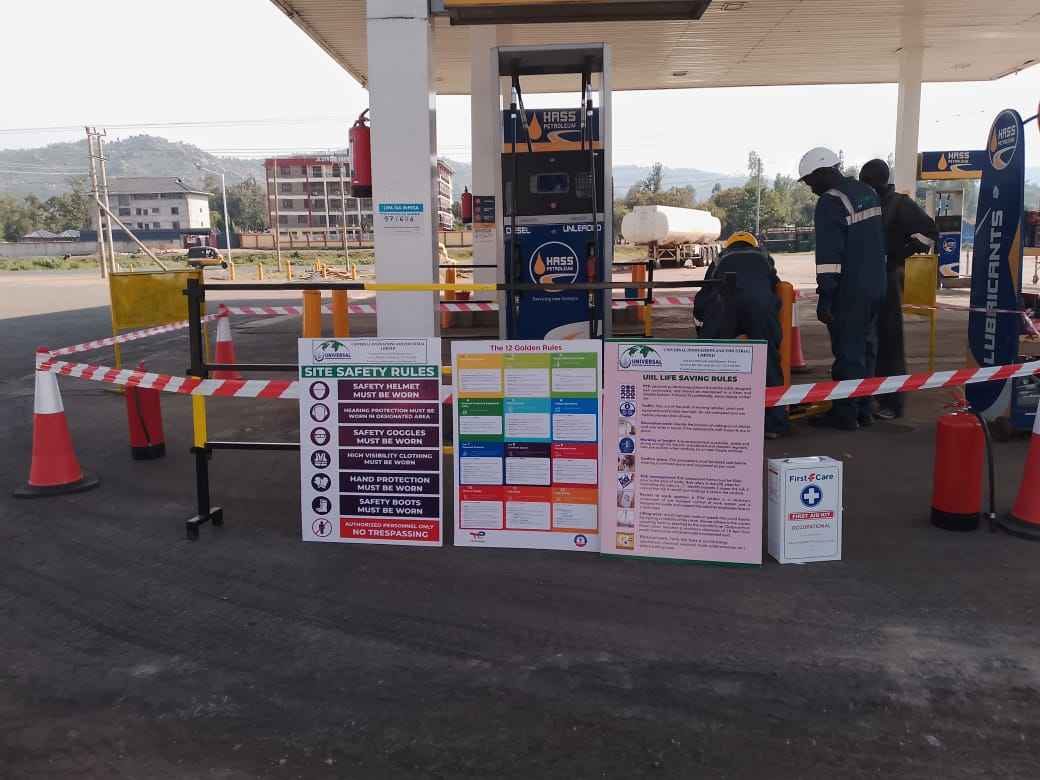
A completed forecourt project by Universal Innovations and Industrial Ltd, canopy, pump islands, paving, and drainage all built to EPRA standards.
Setting up a petrol station in Kenya is one of the most capital-intensive decisions an investor or business owner can make. The numbers being quoted vary wildly depending on who you ask, and many investors go into the process without a clear picture of what each stage actually costs. That confusion leads to underfunded projects, compliance failures, and expensive rework.
At Universal Innovations and Industrial Ltd, we have designed, built, and handed over forecourt projects across Kenya, from straightforward single-island setups to full multi-pump commercial stations. We know what these projects actually cost, what EPRA requires, and where things tend to go wrong.
This guide covers every cost component involved in forecourt construction and dispenser installation in Kenya, civil works, canopy, underground tanks, piping, dispensers, electrical, and regulatory compliance, with real 2026 figures so you can budget accurately.
- Total Cost Overview
- EPRA Permits and Regulatory Requirements
- Civil Works and Forecourt Construction Costs
- Petrol Station Canopy Costs
- Underground Storage Tank Costs
- Piping and Fuel Line Costs
- Fuel Dispenser Installation Costs
- Electrical and Safety Systems
- Ancillary Structures and Station Management
- Full Cost Breakdown Table
- Common Mistakes That Cost Investors
- Why Work With Universal Innovations
- Frequently Asked Questions
What Does It Cost to Build a Petrol Station in Kenya?
The total cost to build a petrol station in Kenya depends heavily on the size of the station, the number of pump islands, the location, and the quality of finishes. Based on current market rates and projects delivered across Kenya, here is what investors should plan for:
Small / Rural Station
1 to 2 pump islands, basic canopy, 2 to 3 underground tanks, simple office structure
Standard Urban Station
3 to 4 pump islands, full canopy, 3 to 4 tanks, oil interceptors, proper drainage
Modern Multi-Pump Station
6 or more islands, large branded canopy, convenience store, car wash bay, full automation
Premium / Highway Station
Full branded facility, multiple services, restaurant, LPG, automated forecourt management system
These figures cover construction and equipment only and exclude land acquisition, which can range from KES 1 million in rural areas to KES 20 million or more for prime urban locations along busy highways or at key intersections.
EPRA Permits and Regulatory Requirements Before Construction Begins
Before a single shovel goes into the ground, you need a Petroleum Retail Station Construction Permit from the Energy and Petroleum Regulatory Authority (EPRA). EPRA does not charge a fee for this permit, but obtaining it takes approximately 45 days after a complete application is submitted.
The permit application requires drawings and documentation from registered engineers. EPRA's technical standards, referenced specifically in KS 1969:2013 and KS 2506:2014, govern how the station must be designed and built. Any contractor who cannot demonstrate familiarity with these standards should not be on your site.
Documents Required for the EPRA Construction Permit
- Certificate of Incorporation or business registration
- Environmental Impact Assessment (EIA) licence from NEMA
- Proof of land ownership or a lease agreement of at least 10 years
- Architectural drawings from a registered engineer showing site layout and forecourt design
- Mechanical engineer's drawings specifying underground tank and piping design
- Civil engineer's drawings showing tank cradle, backfill design, forecourt surface, and drainage layout
- Permit to construct auxiliary entry and exit lanes from KeNHA, KURA, or KeRRA (depending on road type)
- Permission to construct from the County Physical Planning Office
- An Emergency Response Plan summary
- GIS coordinates of the proposed location
- Priced bill of quantities by a registered engineer
After construction, EPRA conducts a pre-licensing inspection before issuing the Licence for Retail of Petroleum Products. This licence requires calibration certificates for all dispensers from the Weights and Measures Department and tank testing certificates from a certified inspector.
Civil Works and Forecourt Construction Costs in Kenya
The civil works component covers everything you can see at ground level: the forecourt surface, drainage, pump island bases, bollards, curbs, and the slab itself. This is where shortcuts have the most visible consequences and where poor workmanship creates long-term problems.
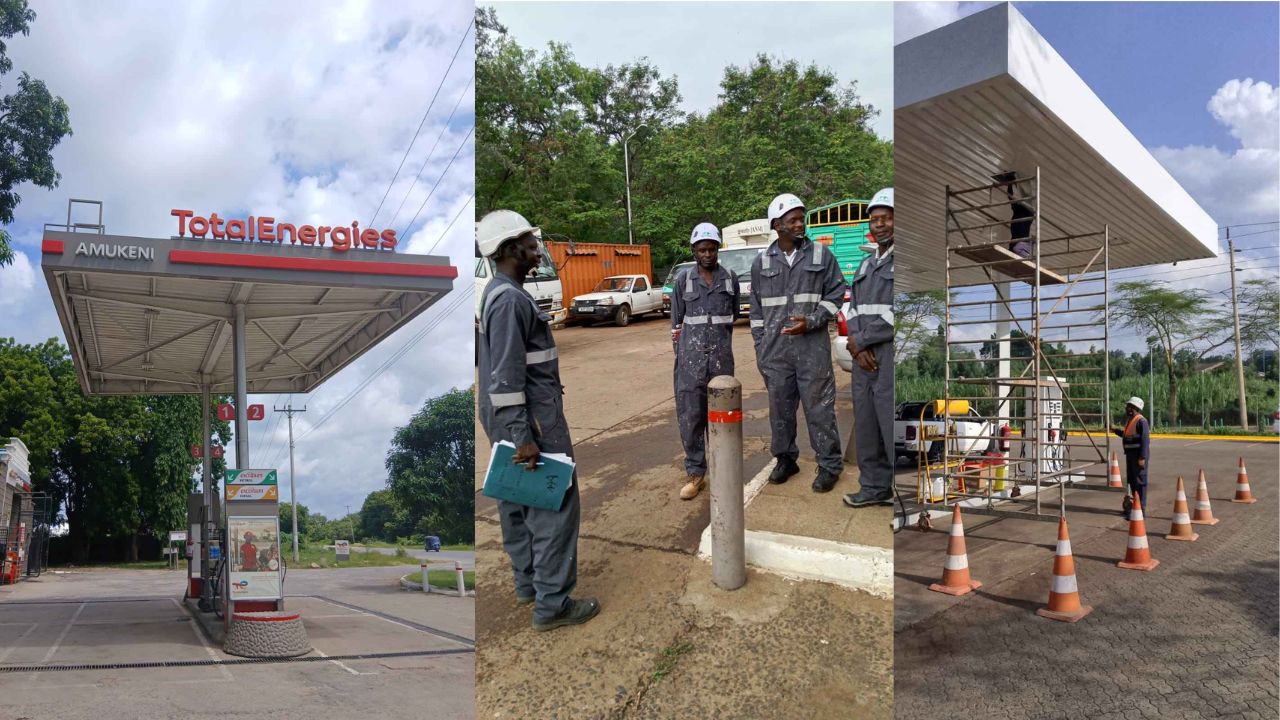
Forecourt civil works at a Universal Innovations project, heavy-duty concrete paving, oil interceptors, and properly graded drainage are non-negotiable for EPRA compliance.
Forecourt Paving and Surface Works
The forecourt surface must be heavy-duty concrete or reinforced paving capable of handling the weight of fuel delivery tankers, which can exceed 30 tonnes. Standard floor tiles or light-duty paving will fail within months under this load. EPRA's construction standards require properly designed hard-standing surfaces.
| Civil Works Item | Indicative Cost (KES) |
|---|---|
| Heavy-duty concrete paving (per m²) | 2,250 to 4,500 per m² |
| Road curbs and edge demarcation (per m) | 1,800 to 4,000 per m |
| Bollards under canopy (per unit) | 9,000 to 18,000 per unit |
| Roadside bollards (per unit) | 4,000 to 9,000 per unit |
| Shallow drainage channels (per m) | 1,200 to 2,500 per m |
| Oil-water separator (OWS) installation | 80,000 to 200,000 |
| Underground tank access manholes (each) | 18,000 to 35,000 |
| Generator room (structure) | 90,000 to 180,000 |
| Office and store structure | 180,000 to 600,000 |
| Total civil works (standard station) | 1,500,000 to 4,000,000 |
Oil-Water Separators and Drainage
NEMA requires that all fuel stations install an oil-water separator system to prevent petroleum contamination of groundwater and soil. This is not optional. The separator intercepts runoff from the forecourt surface before it enters the stormwater system. Stations found operating without adequate OWS systems face closure and prosecution under Kenya's environmental regulations.
Petrol Station Canopy Construction Costs in Kenya
The forecourt canopy is the most visible element of your petrol station and one of the most significant individual cost items in the budget. A well-built canopy protects your staff, customers, and dispensers from rain and sun, and it carries your branding. A poorly built one corrodes within a few years and becomes a liability.
Canopy structures in Kenya are steel-fabricated, with column sizes, beam spans, and cladding specifications varying by station size. Universal Innovations and Industrial Ltd handles canopy design, fabrication, and installation as part of our complete forecourt construction service. Our industrial fabrication capability means the steel structure is engineered and built in-house, not subcontracted.
| Canopy Type | Approximate Size | Indicative Cost (KES) |
|---|---|---|
| Small canopy (1 to 2 islands) | 18 x 24 ft | 650,000 to 1,200,000 |
| Standard canopy (2 to 3 islands) | 24 x 40 ft | 1,200,000 to 2,200,000 |
| Large canopy (4 islands) | 30 x 40 ft | 2,200,000 to 3,500,000 |
| Extra-large canopy (highway station) | 40 x 48 ft and above | 3,500,000 to 6,000,000+ |
| Canopy branding and fascia (separate) | Per station | 70,000 to 250,000 |
Underground Storage Tank Costs and EPRA Standards
Underground fuel storage tanks are the most tightly regulated component of any petrol station in Kenya. EPRA requires that tanks be double-walled steel or fibreglass, installed in concrete-encased pits with leak detection systems. Most standard stations install at least three tanks to store petrol, diesel, and kerosene separately.
Tank capacity is measured in litres, and the most common size for commercial stations is 20,000 litres per tank. Smaller independent stations may use 10,000-litre tanks to reduce upfront cost. Larger highway stations or those with high throughput install 30,000-litre or larger tanks.
| Tank Capacity | Indicative Cost per Tank (KES) |
|---|---|
| 5,000 litres | 130,000 to 250,000 |
| 8,000 litres | 180,000 to 320,000 |
| 10,000 litres | 250,000 to 450,000 |
| 15,000 litres | 300,000 to 580,000 |
| 20,000 litres (EPRA standard) | 450,000 to 900,000 |
| 30,000 litres | 700,000 to 1,400,000 |
Tank installation includes excavation, concrete cradle and backfill design, access manholes, vent pipes, leak detection sensors, and pressure testing. Add approximately KES 80,000 to 200,000 per tank for installation works beyond the tank supply price itself.
Piping and Fuel Line Installation Costs
Piping connects your underground tanks to the dispensers on the forecourt. In Kenya, single-wall piping is the minimum standard for basic setups, but double-wall piping is increasingly specified for new builds because it provides secondary containment if the primary pipe leaks.
EPRA and NEMA both focus heavily on piping integrity during their inspections. Poorly installed pipes that leak fuel into the ground create environmental liability that can far exceed the cost of doing the job properly in the first place.
| Piping Item | Indicative Cost (KES) |
|---|---|
| Single-wall piping (per line) | 20,000 to 45,000 per line |
| Double-wall piping (per line) | 45,000 to 90,000 per line |
| Submersible pump per tank | 35,000 to 80,000 |
| Vapour recovery system | 120,000 to 280,000 |
| Pressure testing (per line) | 5,000 to 15,000 |
| Total piping works (standard 3-tank station) | 200,000 to 500,000 |
Note that EPRA's 2025 regulations now specifically require vapour recovery systems on storage tanks to control fuel vapour emissions. This was previously common only at larger stations but is now a standard compliance requirement for new builds.
Fuel Dispenser Installation Costs in Kenya
The fuel dispenser is what your customers see and interact with every single day. Choosing the wrong specification, buying uncertified units, or skipping calibration will cost you far more than the saving you think you are making. Dispensers in Kenya must be calibrated and certified by the Kenya Bureau of Standards (KEBS) Weights and Measures Department before the station opens.
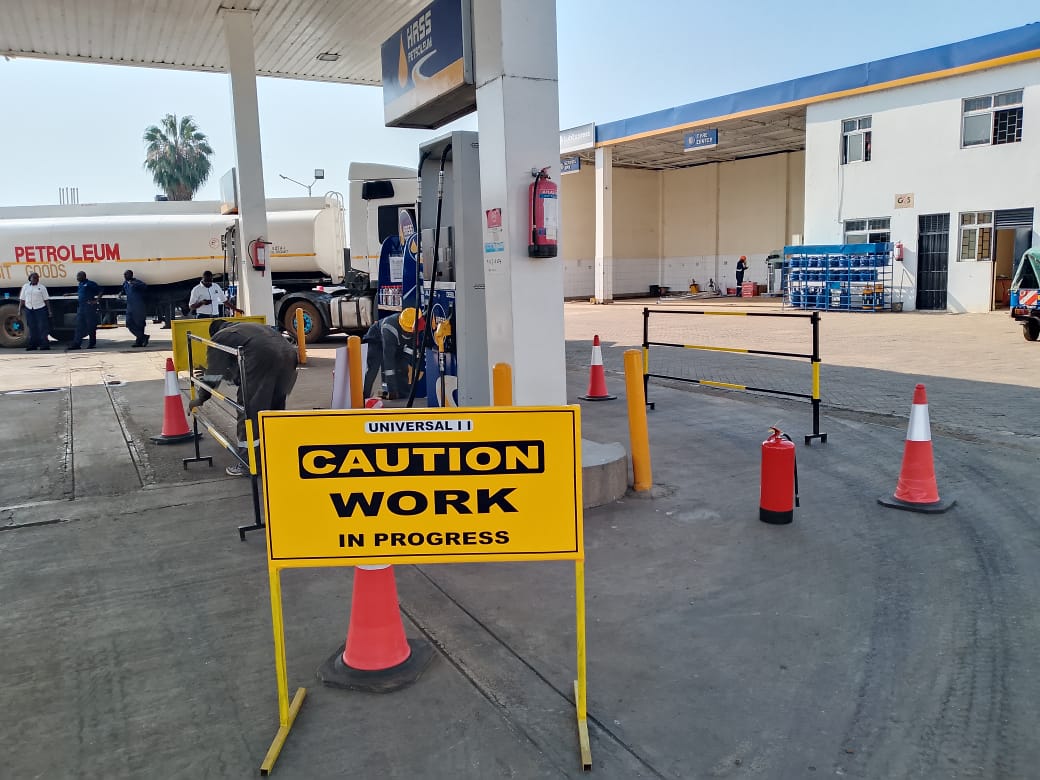
Fuel dispenser installation requires proper pump island bases, piping connections, electrical wiring, and KEBS calibration before the station can legally operate.
Types of Dispensers and Costs
Dispensers vary by number of nozzles, number of products dispensed, flow rate, and technology level. A single-nozzle unit dispenses one product through one hose. A multi-product dispenser can deliver petrol and diesel from a single unit with separate nozzles.
| Dispenser Type | Supply Cost (KES) | Installation (per unit) |
|---|---|---|
| Single-nozzle, single-product (entry level) | 82,000 to 180,000 | 8,000 to 15,000 |
| Dual-nozzle, single-product (standard) | 250,000 to 400,000 | 10,000 to 20,000 |
| Multi-product digital dispenser | 400,000 to 650,000 | 15,000 to 30,000 |
| High-capacity with touchscreen and POS | 650,000 to 800,000+ | 20,000 to 40,000 |
| KEBS calibration certificate (per nozzle) | 2,000 per nozzle | Included in calibration |
For a standard 3-island station with 6 dispensers, budget between KES 1.5 million and KES 3 million for dispenser supply and installation combined, depending on the specification level.
Electrical Systems, Lighting, and Fire Safety Costs
Electrical work at a petrol station is not standard building wiring. All electrical systems in and around a fuel station forecourt must be explosion-proof rated because of the risk of ignition from fuel vapour. This is a specialist area where using a general electrician without petroleum facility experience creates serious safety and compliance risks.
Universal Innovations and Industrial Ltd handles electrical installations for petroleum facilities in-house, including explosion-proof wiring, canopy LED lighting, earthing and bonding systems, and generator integration.
| Electrical and Safety Item | Indicative Cost (KES) |
|---|---|
| Explosion-proof electrical wiring (forecourt) | 200,000 to 500,000 |
| Canopy LED lighting installation | 80,000 to 200,000 |
| Security lighting and CCTV | 60,000 to 180,000 |
| Earthing and bonding systems | 30,000 to 80,000 |
| Generator (9KVA backup, supply and install) | 250,000 to 450,000 |
| Fire extinguishers, sand buckets, and signage | 22,000 to 60,000 |
| Fire suppression system (larger stations) | 200,000 to 600,000 |
| Total electrical and fire safety | 500,000 to 1,500,000 |
Ancillary Structures, Branding, and Station Management Systems
Beyond the core forecourt infrastructure, a complete petrol station requires several additional items that are easy to underestimate in the initial budget.
| Item | Indicative Cost (KES) |
|---|---|
| Office and store building | 180,000 to 600,000 |
| Forecourt management system (tanks + dispensers) | 350,000 to 650,000 |
| Dip stick and manual level gauges | 5,000 to 15,000 |
| Signboards and price totems (per sign) | 16,000 to 45,000 |
| Canopy branding (OMC specification) | 70,000 to 250,000 |
| Water storage tank (5,000L) | 40,000 to 70,000 |
| Perimeter fencing or wall | 200,000 to 800,000 |
| Staff uniforms and operational equipment | 20,000 to 50,000 |
Complete Forecourt Construction Cost Breakdown (Standard Station)
The table below consolidates all cost components for a standard urban petrol station in Kenya: 3 pump islands, 6 dispensers, 3 underground tanks at 20,000 litres each, a standard-sized canopy, and full EPRA-compliant civil works. This is the most common station size for commercial development in Nairobi, Mombasa, Kisumu, Nakuru, and Eldoret.
| Cost Component | Low Estimate (KES) | High Estimate (KES) |
|---|---|---|
| Civil works and forecourt paving | 1,500,000 | 4,000,000 |
| Canopy structure and cladding | 1,200,000 | 2,200,000 |
| Underground storage tanks (3 x 20,000L) | 1,350,000 | 2,700,000 |
| Tank installation (excavation, cradle, manhole) | 300,000 | 600,000 |
| Piping and fuel lines | 200,000 | 500,000 |
| Fuel dispensers (6 units, dual-nozzle) | 1,500,000 | 3,000,000 |
| Electrical systems and fire safety | 500,000 | 1,500,000 |
| Office, generator room, ancillary structures | 300,000 | 800,000 |
| Forecourt management system | 350,000 | 650,000 |
| Branding and signage | 150,000 | 350,000 |
| Regulatory compliance and inspections | 50,000 | 150,000 |
| Total Construction Cost | 7,400,000 | 16,450,000 |
Figures exclude land acquisition, NEMA EIA costs, road authority permits, initial fuel stock, and staff salaries. All rates are indicative 2026 market figures for Nairobi and surrounding areas. Coastal and remote sites may vary by 10 to 20%.
Common Mistakes That End Up Costing Petrol Station Investors More
-
Choosing a contractor on price alone
The cheapest quote for a petrol station build almost always cuts corners on tank installation, piping quality, or civil works specification. When EPRA's inspection team arrives and finds non-compliant work, you will pay twice, once to do it wrong and once to do it right. Verify that any contractor you engage has completed petroleum facility projects and can show you completed stations.
-
Starting construction without EPRA approval
Some investors begin civil works before the EPRA construction permit is in hand to save time. This is illegal and can result in a demolition order for all works done without approval. The 45-day review period is fixed. Use that time to finalise your contractor selection and procurement.
-
Buying uncalibrated or non-KEBS-compliant dispensers
Dispensers sold without KEBS calibration cannot be used commercially. EPRA will not issue your operating licence until every nozzle has a valid calibration certificate from the Weights and Measures Department. Buying cheap uncertified units and then having them rejected adds weeks of delay and replacement cost.
-
Underinvesting in drainage and oil-water separation
NEMA audits petroleum facilities regularly. A station without a properly designed oil interceptor system faces closure and prosecution regardless of how long it has been operating. This is a mandatory infrastructure item, not an upgrade.
-
Not budgeting for working capital alongside construction
Many investors spend their entire budget on construction and have nothing left for the initial fuel stock required to open. Your oil marketing company will require payment for the first stock delivery before they will release fuel. Budget at least KES 3 million for this separately from your construction costs.
Why Petrol Station Investors Work With Universal Innovations and Industrial Ltd
Universal Innovations and Industrial Ltd is a full-service mechanical and construction company with over two decades of experience delivering petroleum infrastructure, civil works, industrial construction, and mechanical engineering across Kenya and Uganda. We are not a general contractor who occasionally takes a petrol station job. Petroleum forecourt construction is a core part of what we do.
-
1
Complete Forecourt Delivery Under One Roof
We handle civil works, canopy fabrication and installation, underground tank installation, piping, electrical systems, and dispenser commissioning. You deal with one contractor, one programme, and one point of accountability, not five separate subcontractors who blame each other when things go wrong.
-
2
EPRA-Compliant Engineering and Documentation
Our engineering team produces all required EPRA drawings in-house, site layout, underground tank designs, forecourt drainage, and piping schematics. Every drawing is done by registered engineers and references KS 1969:2013 and KS 2506:2014 as required. Your permit application goes in complete, the first time.
-
3
Proven Track Record Across Kenya
We have delivered forecourt projects for clients across Nairobi, Mombasa, and multiple counties. Ask us for project references and go visit completed stations before you sign anything. Our work at sites like HASS Nyali Phase 1 and Nyali Phase 2 demonstrates the level of execution we bring to petroleum facilities.
-
4
ERP-Based Project Tracking
We manage every project through ERPNext, giving you real-time visibility on construction progress, material procurement, and milestone completion. You always know where your project stands without having to chase updates.
-
5
Post-Completion Support
Our relationship does not end at handover. We provide maintenance services, equipment servicing, and structural repairs for operating stations. When your forecourt needs attention six months after opening, we are reachable.
Planning a Petrol Station in Kenya? Talk to Our Forecourt Team
Universal Innovations and Industrial Ltd delivers complete forecourt construction and dispenser installation across Kenya. From EPRA permit drawings through to station handover, we manage the entire project so you can focus on your investment. Get a detailed cost estimate for your specific site and station size.
Frequently Asked Questions About Petrol Station Construction Costs in Kenya
Universal Innovations and Industrial Ltd is a registered mechanical and construction company operating across Kenya and Uganda. We deliver petroleum forecourt construction, civil engineering, industrial fabrication, structural works, and electrical installations. Visit universalinnovations.co.ke to learn more or contact us for a project consultation.