

How Much Does It Cost to Build a Warehouse in Mombasa? (2026 Rates)
Mombasa is one of Kenya's most active industrial and logistics hubs, driven by the Port of Mombasa, the Standard Gauge Railway freight terminus at Miritini, and rising demand for warehousing along the Nairobi-Mombasa corridor. If you are planning to build a warehouse in Mombasa in 2026, this guide gives you current, fact-checked cost data, a full breakdown of what drives costs higher on the Coast, and a clear picture of the process from site to completion.
2026 Warehouse Construction Rates in Mombasa
Based on verified 2025/2026 market data, the cost to build a warehouse in Mombasa in 2026 ranges from KES 40,000 to KES 58,000 per square metre for construction works. This covers basic storage godowns at the lower end through to high-specification distribution centres and bonded warehouses at the upper end. The 2025 INTEGRUM handbook pegs the national baseline for warehouse construction at KES 48,270 per m², with Mombasa sitting 5 to 10% above that baseline due to the coastal premium described below.
These rates cover structure, walling, roofing, basic M&E rough-in, and standard finishes. They exclude land, professional fees, county permit costs, NEMA environmental charges, NCA registration levies, utility connections, site access roads, fencing, and external hardstanding. Always commission a priced Bill of Quantities from a licensed Quantity Surveyor before finalising any budget.
The Coastal Premium: Why Mombasa Costs More Than Nairobi
Construction in Mombasa carries a documented cost premium over inland Kenyan cities. Aalis Studios, BORAQS-registered architects, confirm that Mombasa adds 5 to 10% to construction costs relative to the Nairobi baseline for equivalent specification. For warehouse and industrial projects, this premium arises in three specific areas:
1. Corrosion-Resistant Materials
Salt-laden coastal air attacks uncoated steel, standard reinforcement bars, and untreated metalwork. Warehouse builds in Mombasa require hot-dip galvanised structural steelwork or epoxy-coated alternatives, stainless steel or coated fasteners, and treated timber wherever timber is used. These materials carry a meaningful cost premium over standard inland specifications but are non-negotiable for durability.
2. Enhanced Moisture Proofing
Mombasa's high year-round humidity demands additional waterproofing to foundations, floor slabs, and roof junctions. Industrial slabs in coastal warehouses need enhanced surface treatments to resist moisture ingress from below as well as chemical or liquid spills from above. Roof systems must be detailed to handle high-intensity rainfall during the long and short rains without joint failure.
3. Material Logistics Costs
Despite being a port city, Mombasa's building materials still carry higher last-mile distribution costs. Cement costs KES 700 to 850 per 50 kg bag nationally in 2026, with coastal areas consistently at the upper end of that range. Structural steel delivered to Mombasa sites from Nairobi-based mills also carries a transport premium. For large projects, early procurement and bulk buying can partially offset this.
Key Cost Factors for Warehouse Builds in Mombasa
-
■Floor Area and Internal Height Warehouse costs are quoted per m² of floor area, but clear internal height has a significant impact on total cost. A standard 6-metre eaves height is the most cost-efficient. Moving to 8 or 10 metres to accommodate tall racking or bulk cargo drives up structural steel quantities and foundation requirements. Budget 10 to 20% more for every 2-metre increase above the 6-metre baseline.
-
▲Structural System Choice Portal frame steel is the standard for Kenyan warehouses and gives the best cost per m² for clear-span buildings. Concrete frame alternatives are more expensive but better suited to multi-storey or very heavy-duty floor loading. Pre-engineered steel buildings (PEB) can reduce erection time and may offer savings for simple rectangular floor plates above 2,000 m². Our industrial fabrication and welding team handles structural steel supply, fabrication, and erection in-house.
-
○Floor Slab Specification The floor slab is typically one of the largest single cost items in a warehouse build. A standard 150 mm reinforced slab on prepared sub-base suits light to medium loading. Heavy industrial use, including forklifts, heavy racking, and bulk goods, requires a 200 mm or thicker slab with steel fibre reinforcement or a post-tensioned alternative. In Mombasa, variable coastal ground conditions often require additional sub-base preparation or piling, which must be confirmed by a geotechnical investigation before design.
-
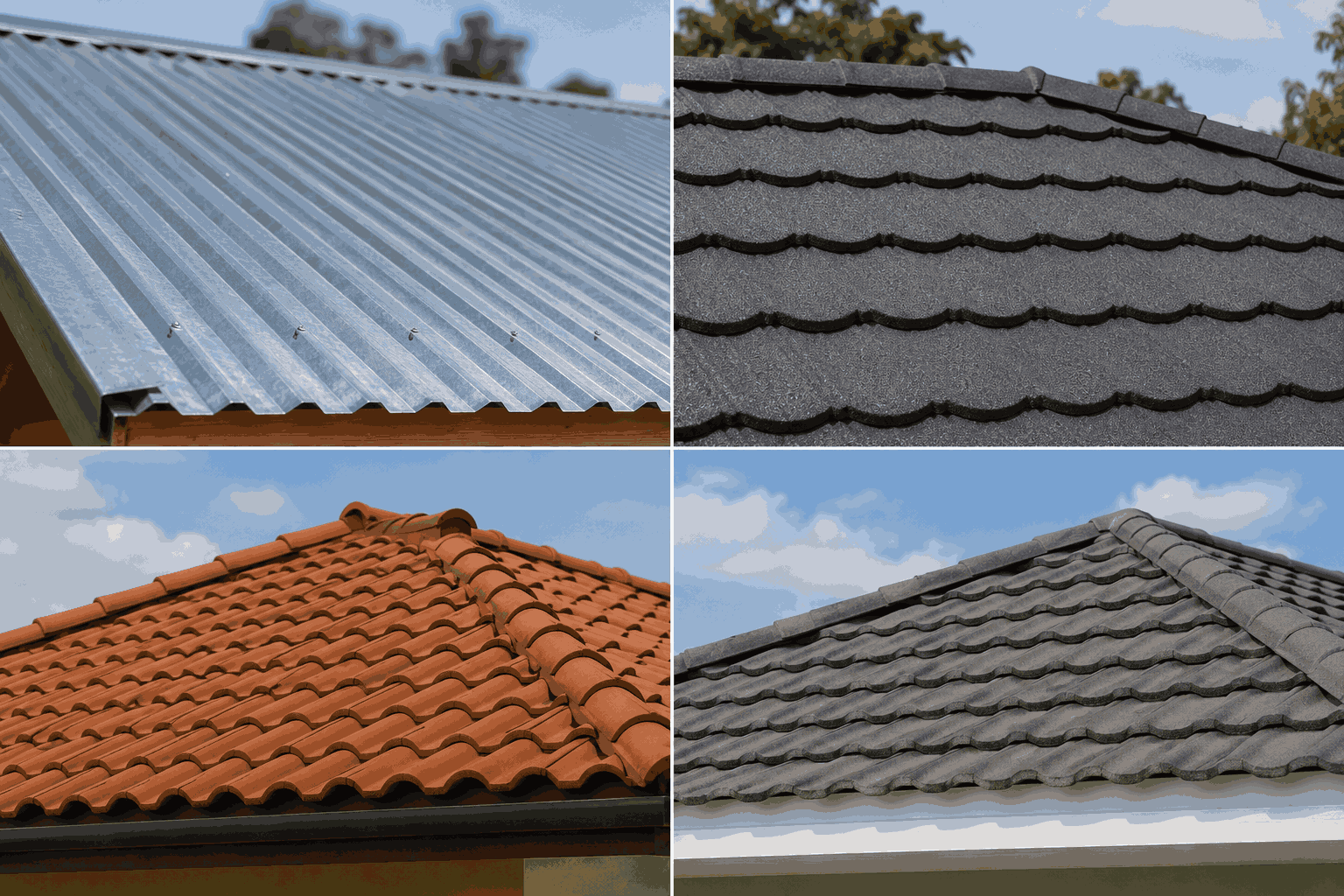
▼Roofing System Long-run pre-painted profiled steel sheeting is standard for industrial roofing in Kenya. In Mombasa, aluminium or coated steel with an anti-corrosion treatment is strongly preferred over standard galvanised. Insulated roof panels are increasingly specified for temperature-sensitive cargo and reduce HVAC operating costs over the building's life. Expect roofing to represent 12 to 18% of total warehouse construction cost.
-
◇Loading Docks and Yard Hardstanding Truck manoeuvring hardstanding, loading docks, dock levellers, and weigh bridges are typically excluded from the quoted construction rate per m² but represent a significant additional cost. Budget KES 2,000 to 3,500 per m² for hardstanding areas, plus KES 400,000 to 900,000 per loading dock position depending on dock leveller specification.
-
◆Office and Welfare Accommodation Most warehouses include an office block, ablution facilities, and a gatehouse. Office space costs more per m² than the warehouse shell, typically KES 56,000 to 70,000 per m² for standard commercial fit-out in Mombasa in 2026. Keep ancillary space to the minimum operationally required to optimise the overall budget.
-
▣Electrical and Mechanical Services Basic industrial lighting and power distribution is included in standard warehouse rates. Additional costs arise for three-phase supply upgrades, CCTV and access control, fire detection and suppression, and specialist process ventilation. Universal Innovations handles full electrical installation and pipe and containment installation as part of integrated warehouse projects. A standard M&E package adds KES 3,500 to 6,000 per m² on top of the structural shell cost.
Full Cost Breakdown by Element
The table below shows how the construction cost of a typical standard warehouse in Mombasa is typically distributed across building elements. Percentages will vary by project specification and site conditions.
| Cost Element | % of Build Cost | Notes for Mombasa |
|---|---|---|
| Substructure (foundations and floor slab) | 18–25% | Higher in Mombasa due to variable coastal ground conditions and enhanced slab specification |
| Structural steelwork and frame | 22–28% | Corrosion-resistant specification adds cost over standard inland rates |
| Roofing system | 12–18% | Coated or aluminium sheeting; insulated panels add 30 to 40% to roofing cost alone |
| Walling and cladding | 8–14% | Concrete block, hollow block, or panel cladding depending on specification |
| Doors, loading bays, and openings | 4–8% | Roller shutters, personnel doors, dock levellers |
| Electrical installations | 8–12% | Industrial lighting, three-phase distribution, sub-metering |
| Plumbing and drainage | 3–6% | Welfare facilities, surface water drainage, grease traps if required |
| Internal finishes and fitout | 3–7% | Minimal for basic warehouses; higher for office and welfare zones |
| Contingency allowance | 8–12% | Coastal projects carry higher unforeseen risk; 10% is the minimum recommended |
| Total Construction Works | 100% | Excludes professional fees, permits, land, and external works |
Worked Examples: Three Warehouse Scenarios
The following examples use the 2026 Mombasa rate ranges and include a 10% contingency. All figures exclude land, professional fees, and permit costs, which are covered in the following sections.
These are indicative budgets only. A licensed Quantity Surveyor must produce a project-specific priced Bill of Quantities before you commit to any figure. Actual costs vary based on soil conditions, specification choices, procurement timing, and market rates at the time of tendering.
Professional Fees to Budget On Top of Construction
Professional fees are charged separately from construction costs and are not included in any rate per m² figure. Under Kenyan law, the applicable minimum scales are set by the Board of Registration of Architects and Quantity Surveyors (BORAQS) via Legal Notice No. 133 of 2023, and by the Engineers Board of Kenya (EBK) via Legal Notice No. 20 of 2022.
As a practical planning rule, budget 15 to 20% on top of construction cost to cover all professional fees, statutory levies, and permit costs combined. For a KES 100 million warehouse project, that means allowing KES 15 to 20 million before the first stone is laid. This figure is consistent across our own project experience and the guidance published by INTEGRUM and BORAQS.
Permits and Approvals in Mombasa County
Three regulatory bodies must approve a warehouse project before construction can legally commence in Mombasa. All three processes must be completed in sequence, and together they typically take 8 to 14 weeks for a standard project that passes review without revision.
-
Mombasa County Planning Approval (eDams Portal)
Architectural and structural drawings must be submitted through the Mombasa County Planning Portal (eDams). Plans must be stamped by BORAQS-registered professionals. The county reviews drawings across all relevant departments simultaneously and issues an invoice for plan approval fees. For commercial projects, renewal of previously approved plans in Mombasa costs 40% of the original approval fee. Allow 4 to 8 weeks for this stage, longer if revisions are required.
-
NEMA Environmental Screening or EIA
The National Environment Management Authority (NEMA) requires environmental screening for all commercial and industrial projects. Standard screening takes 14 to 30 days. A full Environmental Impact Assessment (EIA) may be required for larger facilities or those near ecologically sensitive coastal zones and takes up to 90 days. Start the NEMA process in parallel with county plan submission to reduce overall programme duration.
-
NCA Project Registration
After county approval, register the project with the National Construction Authority (NCA). The NCA levy is 0.5% of total project cost for projects above KES 5 million. The appointed contractor must hold a current NCA registration and annual practising licence in the appropriate category for industrial and commercial works. Your architect and engineers must also hold current professional board registrations.
Universal Innovations manages the full project delivery cycle, from initial design and permit coordination through to construction, commissioning, and handover. Explore our core services relevant to warehouse projects:
Cost Control Tips for Warehouse Projects in Mombasa
- ✓ Engage a Quantity Surveyor at the earliest possible stage. A licensed QS prepares the priced Bill of Quantities before you go to tender, giving you a reliable benchmark against which to assess contractor quotes and identify cost overrun risk before it materialises. The QS fee is recovered many times over on any project above KES 20 million.
- ✓ Conduct a geotechnical investigation before design commences. Coastal Mombasa has variable ground conditions including reclaimed land, coral limestone, sandy soils, and areas with high water tables. A soil investigation report allows the structural engineer to optimise the foundation and slab solution and avoids costly redesigns mid-project.
- ✓ Specify correctly for the coastal environment from day one. Do not allow a contractor to substitute standard materials to reduce the tender price. Retrofitting corrosion protection or replacing prematurely degraded structural steel costs far more than getting the specification right at the outset.
- ✓ Keep the floor plate simple and rectangular. A simple rectangular portal frame warehouse is the most cost-efficient structural form. Complex irregular shapes increase steel quantities, waste, and programme time. Reserve budget for operational function rather than architectural complexity at the early design stage.
- ✓ Start NEMA and county permit processes as early as possible. Permit delays are the most common cause of programme overrun on Mombasa construction projects. Initiate NEMA screening concurrently with county plan preparation rather than sequentially. A 90-day EIA, if required, should be identified and started before detailed design is finalised.
- ✓ Procure structural steel early. Steel is the largest variable cost item in a warehouse project and is subject to global price fluctuations. Early procurement locks in a price once designs are sufficiently advanced and protects against mid-project cost increases. Our industrial fabrication team can advise on procurement timing based on current market conditions.
- ✓ Schedule structural works during the dry season. Mombasa experiences two rainy seasons annually (approximately March to May and October to November). Construction during the rains slows productivity, increases concrete curing risk, and creates site access and drainage problems. Scheduling major structural works for the dry season reduces programme risk and can reduce overall labour costs.
- ✓ Review our completed projects before appointing a contractor. Experience with comparable industrial projects on the Kenyan coast is not universal. Our case studies page shows the range of construction and industrial projects we have delivered across Kenya, giving you a concrete basis for assessing our track record.
Frequently Asked Questions
The cost to build a warehouse in Mombasa in 2026 ranges from KES 40,000 to KES 58,000 per square metre for construction works, depending on warehouse type and specification. A basic 1,000 m² storage godown typically costs KES 46 to 53 million for construction alone. Adding office accommodation, hardstanding, a 10% contingency, professional fees, and permits typically brings the total project cost to KES 60 to 80 million for a standard 1,000 m² facility. These figures should be treated as indicative; a priced Bill of Quantities from a licensed Quantity Surveyor is the only reliable basis for project budgeting.
Yes, typically 5 to 10% more expensive for a comparable specification, according to BORAQS-registered architects at Aalis Studios. The premium arises from the mandatory use of corrosion-resistant materials in the coastal salt environment, enhanced moisture proofing requirements, and slightly higher material costs at the Coast. The cost difference is justified by significantly longer structural lifespan when correctly specified for the coastal climate.
No. Construction cost per m² figures cover physical construction works only: structure, walling, roofing, basic M&E rough-in, and standard finishes. Professional fees for the architect (min. 6%), structural engineer (3.5 to 4.5%), quantity surveyor (min. 3.5%), and specialist engineers are charged separately under the statutory scales published by BORAQS and the Engineers Board of Kenya, and typically add 15 to 20% to total project cost on top of construction.
Allow 8 to 14 weeks for county planning approval, NEMA screening, and NCA registration before construction starts. Construction of a standard 1,000 to 2,000 m² warehouse then takes 16 to 26 weeks depending on complexity and weather conditions. From initial brief to practical completion, a medium warehouse project in Mombasa typically takes 9 to 12 months. Starting the NEMA and county approval processes as early as possible is the single most effective way to reduce total programme duration.
All commercial and industrial projects require at minimum an environmental screening by NEMA. A full EIA may be required depending on the project scale, location relative to the coastline, and the nature of goods to be stored. Facilities near ecologically sensitive areas, handling hazardous goods, or of significant size are most likely to require a full EIA, which can take up to 90 days. Your environmental consultant will advise on the applicable category at the start of the project.
The NCA levy is 0.5% of total project cost for projects valued above KES 5 million, payable at the time of NCA project registration. For a KES 100 million warehouse, the NCA levy is KES 500,000. NCA registration must be completed after county planning approval and before construction commences. The contractor must also hold a current NCA annual practising licence in the relevant category for industrial and commercial construction.
Cold storage is significantly more expensive. The 2025 INTEGRUM Construction Costs Handbook places cold storage centres at KES 58,120 per m² nationally, compared to KES 48,270 per m² for a standard warehouse. Applying the 5 to 10% Mombasa coastal premium brings the Mombasa cold storage rate to approximately KES 61,000 to 64,000 per m² before accounting for the refrigeration plant itself, which is typically quoted separately. The primary cost drivers are insulated panel walls and roofs, specialist flooring with integrated insulation and drainage, high-capacity refrigeration plant, and the dedicated electrical infrastructure required to power it. Cold storage costs should always be assessed on a project-specific basis with a specialist quantity surveyor and refrigeration engineer.
Planning a Warehouse Build in Mombasa?
Universal Innovations delivers industrial and corporate construction projects across Kenya, including warehouse builds, structural works, electrical installations, and complete project management from design to handover. We work with NCA-registered contractors and licensed consultants and have delivered projects at scale across Nairobi, Mombasa, and the wider region.
Cost data sources: INTEGRUM Construction Consortium 2025 Handbook; Aalis Studios 2026 Construction Cost per m² Guide; Aspax Construction Company 2025/2026 Guide. Professional fee scales: BORAQS Legal Notice No. 133 of 2023; EBK Legal Notice No. 20 of 2022. Permit process: NCA Kenya; NEMA Kenya; INTEGRUM Construction Approvals Kenya guide. All figures are indicative. Engage a licensed Quantity Surveyor for project-specific cost advice.
Company
Universal Innovations & Industrial Limited
Most Recent Posts
- All Post
- Building Design & Finishes
- civil engineering in Kenya
- Construction Insights & Tips
- Construction Works in Kenya
- Electrical Installations in Kenya
- Fuel Infrastructure Projects
- HVAC services in Kenya
- Industrial & Corporate Construction
- Industrial Fabrication & Welding

Explore Our Services
Universal Innovation & Industrial Ltd. delivers high-quality mechanical, civil, and electrical engineering solutions with a commitment to safety, innovation, and efficiency—explore our services to see how we can support your next project.
Company
Universal Innovations & Industrial Limited
Most Recent Posts
- All Post
- Building Design & Finishes
- civil engineering in Kenya
- Construction Insights & Tips
- Construction Works in Kenya
- Electrical Installations in Kenya
- Fuel Infrastructure Projects
- HVAC services in Kenya
- Industrial & Corporate Construction
- Industrial Fabrication & Welding
Explore Our Services
Universal Innovation & Industrial Ltd. delivers high-quality mechanical, civil, and electrical engineering solutions with a commitment to safety, innovation, and efficiency—explore our services to see how we can support your next project.